
Understanding the Environmental Conditions Black Mould Requires
Black mould, often referred to as Stachybotrys chartarum, is a type of fungus that can appear in homes and buildings under the right circumstances. It is frequently found in damp or humid areas where stagnant moisture meets materials that mould can feed on. Although the phrase “black mould” might instantly cause alarm, it is crucial to understand precisely which conditions encourage its growth in order to prevent it and keep your home healthy and safe. In this guide, we’ll delve into the specific environmental factors mould needs to thrive, how to spot and prevent an infestation, and general housekeeping tips that help discourage mould from ever taking hold in the first place.
Why Does Black Mould Form?
Black mould typically emerges when there is excess moisture that remains over time. Mould spores are present almost everywhere in small quantities, both outdoors and indoors, but they only become problematic when given the opportunity to settle onto damp surfaces where they can multiply. As these spores multiply, they can spread through the air and attach to new surfaces, quickly turning a small, isolated patch of mould into a widespread colony if not dealt with promptly.
Key factors that allow black mould to grow include high humidity, water leaks, condensation, or other events that create persistently damp conditions. For example, even a minor crack in a window or an unsealed bathroom tile can supply enough moisture for mould to begin forming over time. Once mould spores have latched onto a suitable surface, they feed on organic matter—a wide variety of household materials can serve as food sources, as long as they contain something mould can metabolize, such as cellulose, which is present in cotton, paper, drywall, and wood.
1. Moisture: The Primary Driver
The single most crucial factor that supports black mould growth is moisture. This can come in numerous forms: high humidity levels, leaks, floods, or even everyday activities like cooking and showering. When there is water lingering on surfaces long enough for spores to settle and start feeding, mould can take hold.
In a home environment, moisture-related trouble spots often include:
- Bathrooms: Showers, sinks, and baths create steam, which can condense on walls if not properly ventilated.
- Kitchens: Cooking and dishwashing without adequate air circulation can lead to a humid atmosphere.
- Basements and Crawl Spaces: These areas may be more susceptible to leaks or groundwater seeping through partially sealed walls.
- Attics: Poor insulation or roof leaks can cause the attic to become damp and humid.
Ensuring you have functioning exhaust fans, dehumidifiers, and well-sealed windows can go a long way toward reducing moisture levels. High humidity (above 60%) is especially conducive to mould growth, so monitoring humidity with a simple gauge can help you know when to ventilate or dehumidify.
2. Warmth
Although mould can survive in a broad range of temperatures, it prefers areas with moderate warmth—typically between 20°C and 30°C (68°F and 86°F). Most homes are kept within this general temperature range, which means there is little that can be done about controlling the warmth aspect, aside from ensuring that heavily heated spaces are not also retaining moisture. Simply put, mould finds a comfortable setting in many modern homes.
You can, however, discourage mould in warmer areas by improving air circulation. Air conditioners, fans, and open windows on mild days can all help keep your home from developing pockets of stagnant, humid air where mould thrives.
3. Darkness and Low Light
Unlike green plants, mould is not dependent on sunlight to grow. In fact, black mould does best in darker, poorly lit environments. Areas tucked out of sight—under sinks, behind walls, or inside utility closets—tend to be prime locations. The lack of sunlight combined with moisture and stagnant air supply mould with an ideal microclimate to begin colonizing.
Although you can’t turn every dark corner into a sunlit space, it helps to keep an eye on enclosed areas and ensure they remain as dry as possible. Regularly check under sinks, around water heaters, or in the corners of your basement or storage rooms for any signs of moisture or musty odors that indicate mould activity.
4. Organic Material (A Food Source)
Mould spores need a source of nutrients to survive and multiply. Black mould in particular flourishes on materials that contain cellulose (such as paper, drywall, wood, and many types of textiles). Homes are filled with these cellulose-rich surfaces—drywall and wooden frames in the walls, wooden furniture, cardboard boxes in storage, and so on. Once moisture meets these cellulose-heavy materials, mould has all it needs to colonize.
To reduce the risk, try to keep these materials as dry as possible. If you notice a water leak near drywall or a spill that seeps into carpeting, act quickly to remove the water and dry the area completely. Even short-term dampness can allow mould spores to settle in.
5. Poor Ventilation
Ventilation problems often go hand in hand with moisture. In areas where air does not circulate well, humidity becomes trapped. Kitchens and bathrooms are common culprits, as the steam from cooking or showering can quickly condense. In basements, inadequate ventilation can trap humid air from the rest of the house.
A few tips for better ventilation include:
- Installing or upgrading kitchen and bathroom exhaust fans.
- Using window or box fans in humid rooms to introduce fresh, dry air.
- Ensuring attic ventilation is functional, preventing rising moisture from becoming trapped overhead.
- Keeping vents and filters clean, so air can circulate freely.
Addressing ventilation issues sooner rather than later can protect your property from mould and the potential complications of excess humidity.
Signs of Black Mould and Why Early Detection Matters
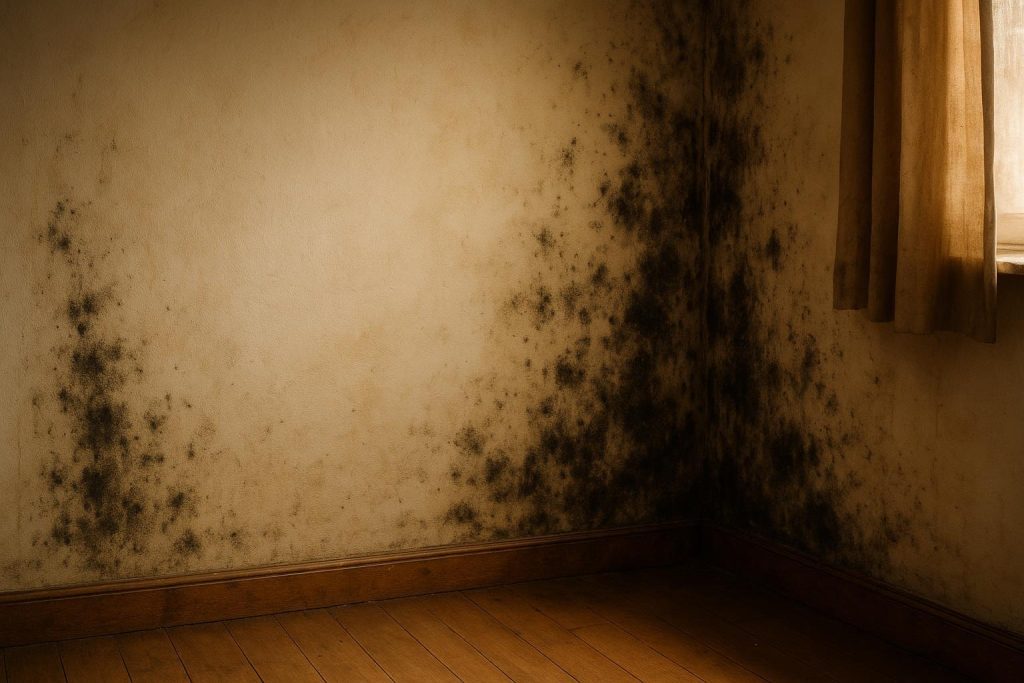
Black mould can appear greenish-black, grey, or even dark brown. Sometimes it might be hidden behind plumbing fixtures or wall cavities, so visual inspection is not always enough. Additionally, it often has a musty or earthy smell—if you detect a persistent odor in an enclosed space, mould could be the culprit.
Early detection is always easier than a large-scale cleanup. If you notice the following signs, take action to investigate and address them promptly:
- Dark streaks or spots appearing on walls, ceilings, or around windows.
- Warped or damp surfaces that feel soft to the touch (suggesting water damage and potential mould growth underlying the paint or wallpaper).
- Constant musty odors in a particular room or area.
- Bubbling paint or loose wallpaper, indicating hidden moisture.
Steps to Prevent Black Mould Growth
Below are a handful of practical tips that anyone can implement to reduce the chances of mould taking hold:
- Control Humidity: Use a dehumidifier in damp areas like the basement, and ensure all rooms have adequate airflow.
- Promptly Fix Leaks: Whether it’s a small drip behind the sink or a bleed in your basement walls, address water leaks as soon as they’re discovered to avoid persistent damp buildup.
- Ventilate Moisture-Producing Activities: When cooking or showering, switch on an exhaust fan or open a window to dissipate steam quickly.
- Insulate Where Needed: This helps prevent condensation on cold surfaces such as pipes or exterior walls.
- Regularly Clean and Inspect: Keep surfaces free of dust and grime. Dust can hold moisture and feed mould, so routine cleaning plays an important role in mould prevention.
While everyday cleaning goes a long way, more extensive efforts—such as residential cleaning—can help tackle neglected corners and surfaces. Keeping your home neat and dry reduces the availability of both food sources and moisture, making it tougher for mould to find a foothold.
Maintaining a Cleaner, Safer Living Space
Apart from moisture control and regular inspections, here are some additional strategies you can consider for a more mould-resistant home:
- Use Mould-Resistant Products: If you are remodeling or making repairs, look for mould-resistant drywall and paints, especially in high-humidity rooms.
- Store Items Properly: Keep boxes and stored belongings off the floor, especially in damp areas. Using plastic bins instead of cardboard can also help.
- Avoid Carpeting in Humid Spaces: Carpeting in a often-wet basement, for instance, can trap moisture underneath the fibers and encourage mould growth.
- Stay on Top of Air Filter Replacements: Clean or replace HVAC filters regularly, so that your heating and cooling circulates clean, dry air.
While not every home is the same, these extra measures can significantly reduce your chances of encountering serious mould problems.
When to Call a Professional
It is important to note that once mould takes hold over a large area or infiltrates into walls, it can be difficult to address on your own. Evidence of widespread mould, structural damage, or health concerns are all signs you may need specialized mould remediation services. Dealing with an ongoing or significant mould infestation without the right methods can inadvertently spread spores further throughout your home, defeating the purpose of your cleanup.
However, if you suspect a milder scenario or you simply wish to maintain a consistently healthy environment, professional cleaning services can help you keep up with regular cleaning, dusting, and disinfecting. By staying on top of these tasks, you can significantly reduce dust, airborne spores, and other factors that contribute to mould growth.
The Role of Consistent Cleaning in Preventing Black Mould
One of the core ways to avoid mould is to prevent the accumulation of debris, dust, and moisture. A thorough cleaning plan that includes drying damp areas, vacuuming carpets, and wiping surfaces with appropriate cleaning agents is key. If you’re located in the Edmonton area, you may find that professional services like deep cleaning or recurring residential cleaning keep your home in a condition where mould is less likely to gain a foothold. These services often involve attention to detail, like removing grime from hidden corners and ensuring bathrooms or kitchens are properly dried after cleaning tasks.
While professional cleaners are not mould remediation experts, they can help you establish a cleaner baseline—ensuring moisture issues are spotted quickly, surfaces are dried, and hidden nooks are kept in the best possible condition. This can help you take early action on problems like slow leaks or slight dampness before they escalate.
Final Thoughts on Black Mould Growth Conditions
In summary, the critical components mould needs to flourish are moisture, warmth, an organic food source, lack of sunlight, and poor ventilation. By understanding these factors, homeowners can stay vigilant about any area of their home where dampness or other conditions might develop unchecked. Addressing water leaks promptly, dehumidifying consistently, and maintaining a clean living space all work together to deny mould the environment it needs.
Regular maintenance and preventative measures are your best line of defense. Simple actions—like running your exhaust fan after every shower, promptly fixing plumbing leaks, and wiping down surfaces—make a huge difference in stopping black mould from taking root. If you’re eager to cultivate a safer home environment, consider implementing a scheduled cleaning regimen. When performed regularly, it helps you detect and address potential mould-friendly conditions early on. You’ll also enjoy a fresher, healthier living space overall. Staying informed, watching out for problem areas, and managing indoor moisture is the key to keeping black mould in check.
