
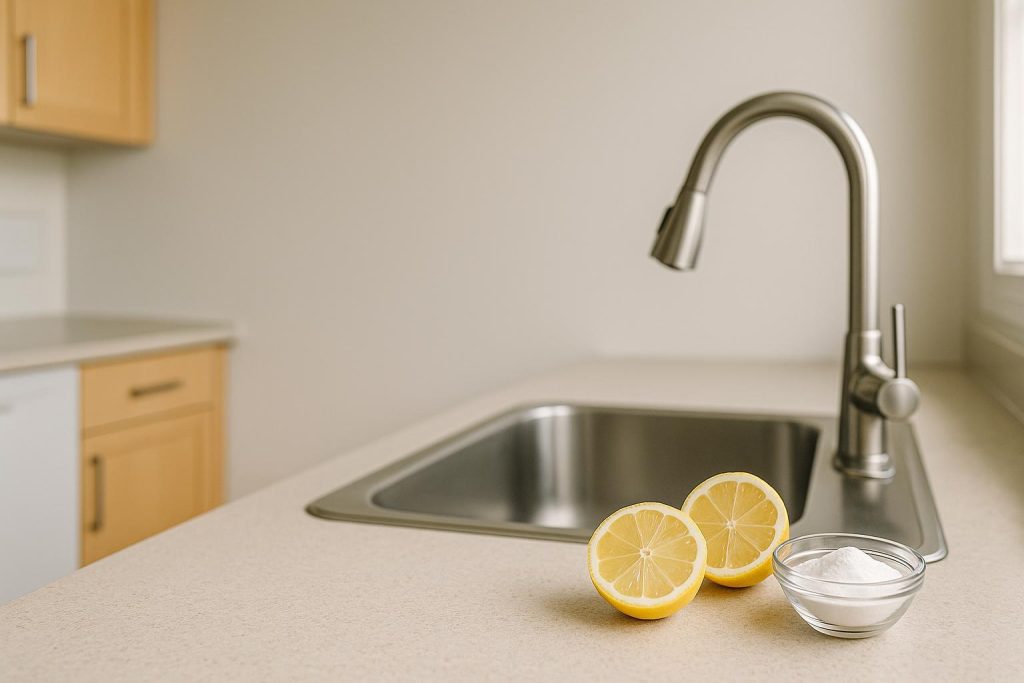
Yes, lemon can help reduce some household smells and leave a fresh citrus scent, particularly in kitchens. However, lemon works best for mild, everyday odors. It won’t permanently remove a smell if the source is still present.
Fresh lemon contains citric acid and aromatic oils that make it useful for certain cleaning and deodorizing tasks. For persistent odors, the most effective approach is usually to find the source, clean the affected area, and improve ventilation.
How can you use lemon to reduce household odors?
There are several simple ways to use fresh lemon around the home:
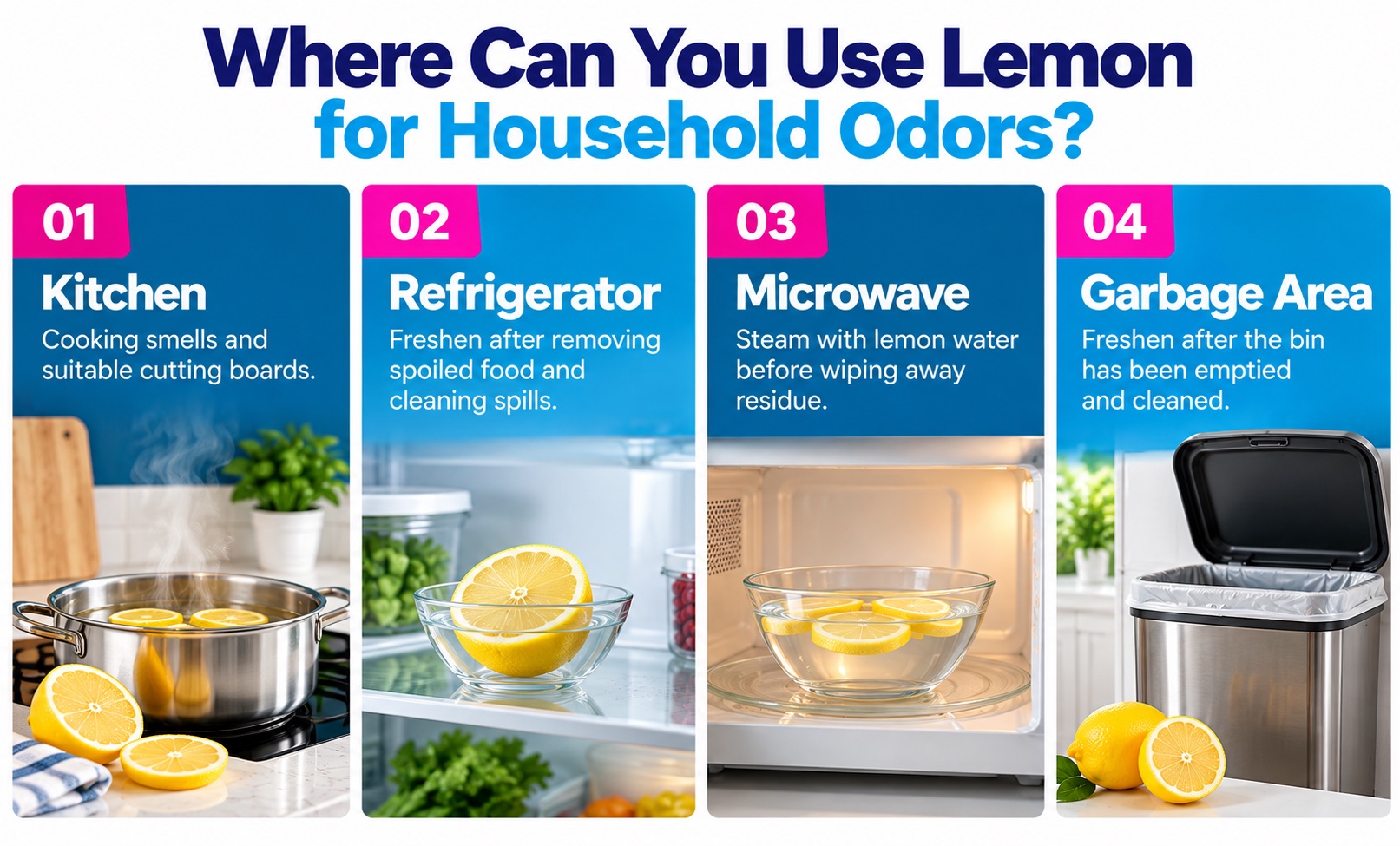
- Kitchen odors: Simmer lemon slices in water to add a fresh citrus scent after cooking.
- Cutting boards: Lemon can help remove some food smells from suitable cutting boards. Wash the board thoroughly afterward.
- Refrigerators: A cut lemon may provide a fresh scent, but spoiled food and spills should be removed and cleaned rather than relying on lemon alone.
- Garbage areas: Lemon peels can temporarily freshen an empty, freshly cleaned garbage bin.
- Microwaves: Heating a microwave-safe bowl of water with lemon slices can create steam that helps loosen food residue before wiping the interior clean.
Always check the manufacturer’s cleaning instructions before applying lemon juice directly to a surface. Its acidity can damage or discolour some materials, including certain natural stone surfaces.
Does lemon neutralize odors or just cover them up?
It can do a little of both, depending on the odor and how the lemon is being used.
The citric acid in lemon can interact with some residues and compounds on surfaces, while the oils in the peel provide the familiar citrus fragrance. This can make an area smell fresher, but lemon shouldn’t be expected to eliminate every odor at its source.
If the smell comes from old food, grease, garbage, dirty surfaces, moisture, or another source, cleaning that source is more important than adding fragrance.
Can you use lemon as a disinfectant?
Lemon is useful for some everyday cleaning tasks, but it shouldn’t be treated as a replacement for an approved household disinfectant when disinfection is required.
Claims that lemon juice “kills bacteria” or disinfects countertops, bathrooms, and other household surfaces can overstate what it can reliably accomplish.
It’s also important not to mix homemade cleaning ingredients without checking that they’re safe to use together. More ingredients don’t necessarily make a cleaning solution more effective.
What about lemon on carpets and upholstery?
Be careful when applying lemon juice directly to fabrics, carpets, rugs, or upholstery. Its acidity could affect certain fibres or finishes, and it may cause staining or discolouration.
For odors in soft furnishings, start by identifying what caused the smell. Vacuuming, washing removable fabrics, improving ventilation, or using a cleaning method recommended for that particular material will generally be more reliable than spraying it with lemon juice.
How do you get rid of persistent household smells?
If a smell keeps returning, there is probably an underlying source that needs attention. Check garbage bins, appliances, drains, carpets, upholstery, food spills, and other areas where residue can accumulate.
Musty smells deserve particular attention because they can sometimes indicate excess moisture. Improving ventilation or controlling humidity may help, but the source of the moisture should also be investigated.
Lemon is best viewed as a simple household freshener and occasional cleaning aid, rather than a solution for every bad smell.
For odors caused by dirt, spills, grease, or buildup around the home, a more thorough cleaning may be needed. Fussy Cleaning Services can help clean the areas where everyday household odors and buildup tend to linger.
